Unboxing: The Bugeaters FC Mystery Box

One of the rising brands in lower tier soccer is Bugeaters FC. After their initial splash in the UPSL last year, the Nebraska-based club recently announced an upcoming shift over to the Gulf Coast Premier League. In 2020, the club will help launch the GCPL’s expansion division, Great Plains Premier League. But their rise in the public’s awareness was only partially connected to their play on the field. Paired with pitch excellence is a great approach to branding and promotion. From their eye-catching tractor logo to their partnership with podcasting stars The Cooligans, Bugeaters have mastered the art of selling their look with creativity and class.

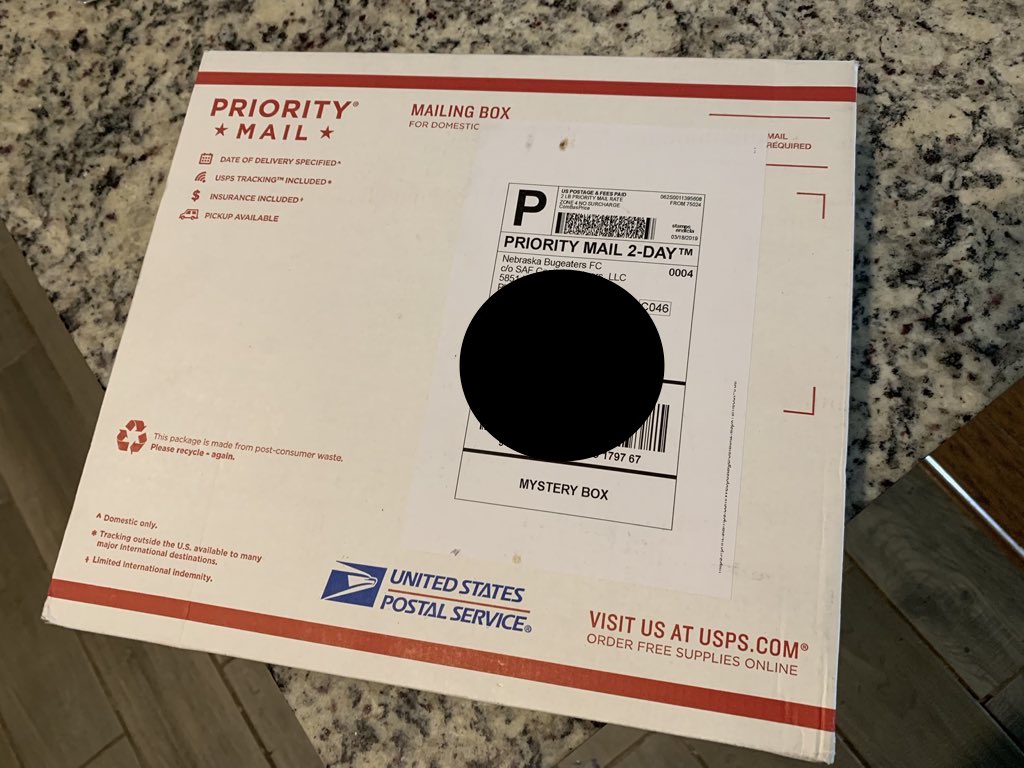
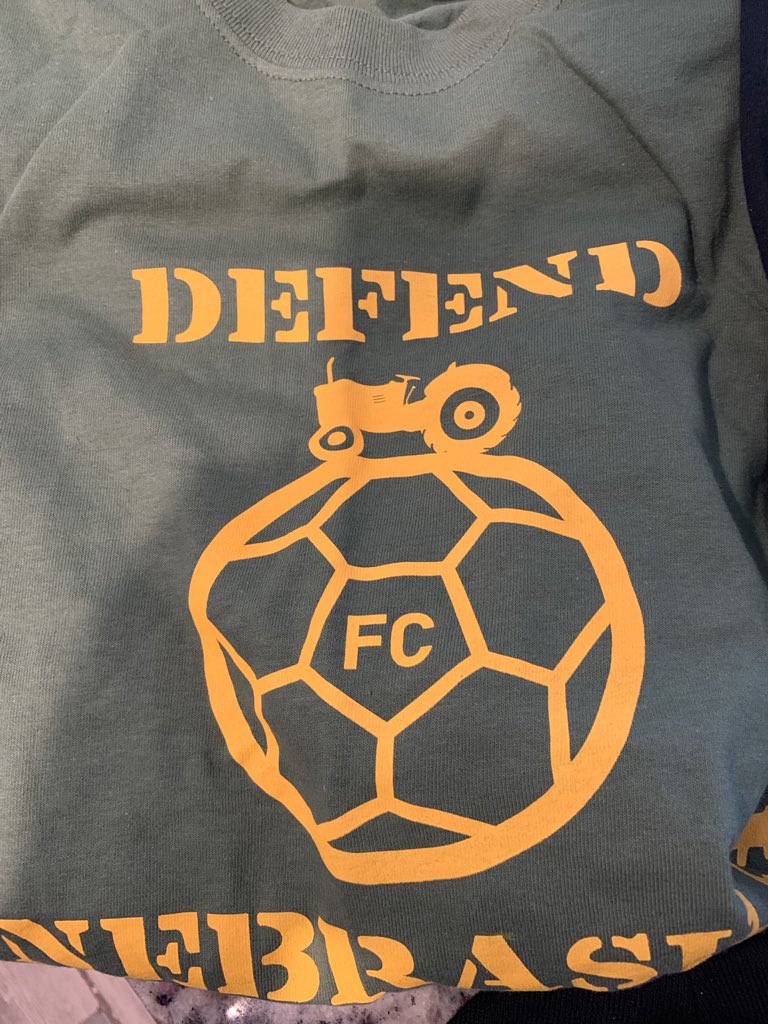
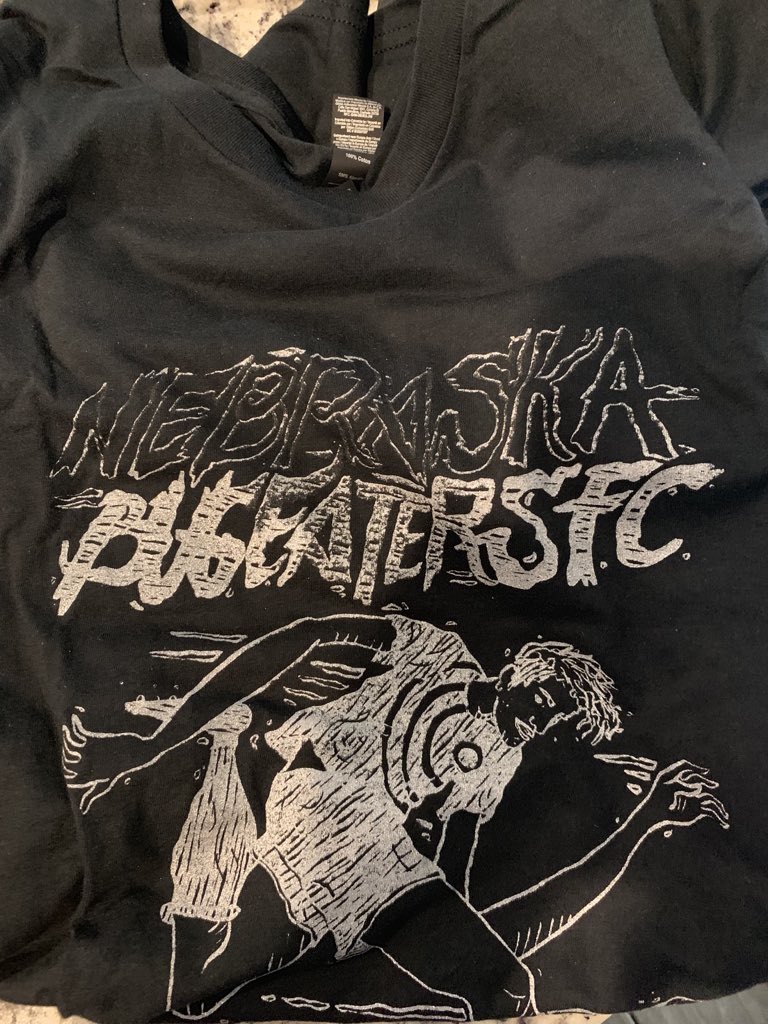
The club has always offered sales on their social media, but when they recently promoted a sale on their mystery kit box, we thought we’d take a look and share an unboxing post with our readers.

Looking good so far.

Looking good so far.

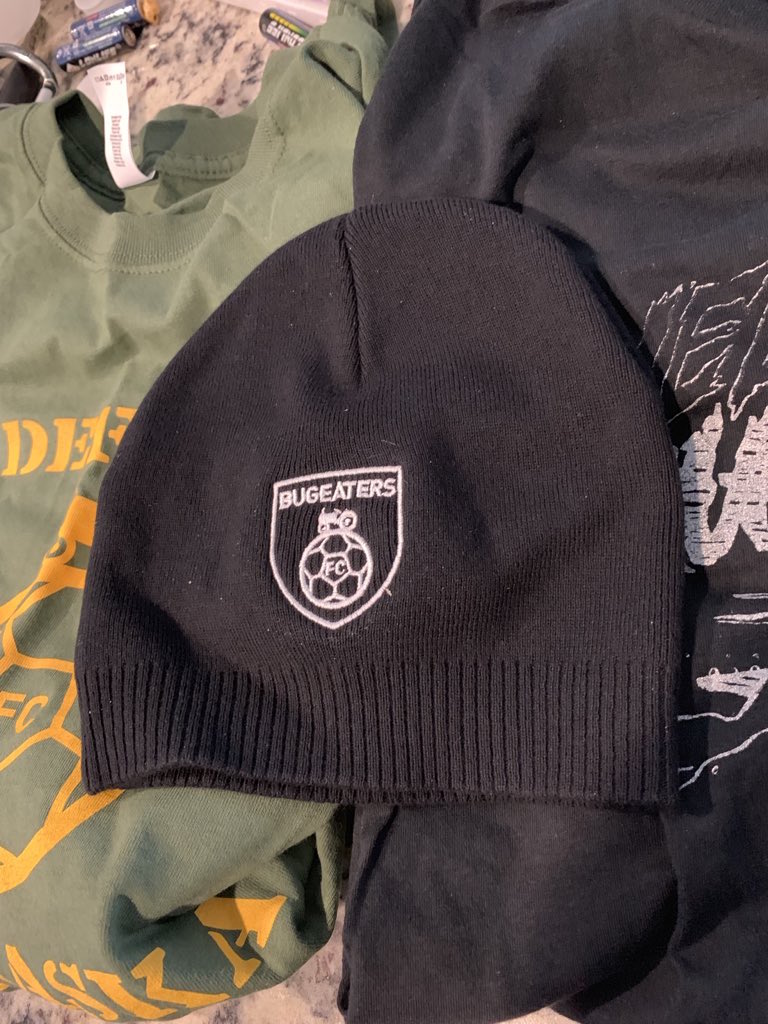
Channelling their inner Brad Pitt.

Channelling their inner Brad Pitt.

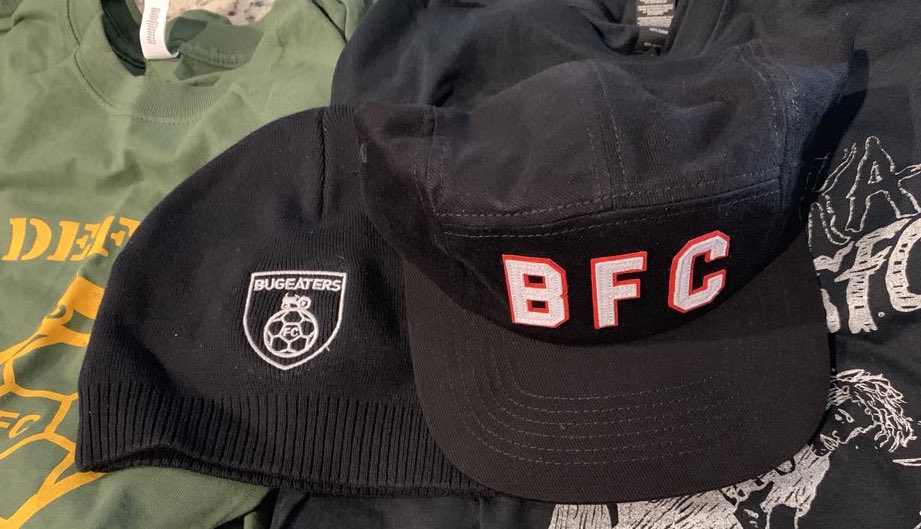
So the box is $40, but what a deal! Inside the box were two great t-shirts, a beanie, and beautiful Talisman “BFC” cap.

We certainly hope that the concept of mystery boxes continues to spread throughout the lower leagues, especially if clubs take it as serious as Bugeaters FC does. We often say that supporting local clubs begins by spending your money on their merch. This Bugeaters Mystery Box is an amazing deal for that supporting dollar. $40 has you completely geared up to support BFC in their 2019 season. Great deal from a great club. Get yours today!

Supporter Culture: The Roots Go Way Back

To the Italians, football is theatre. It’s so deeply ingrained in calcio, that it’s in the language that is used. This allusion is sadly lost in the, mostly Anglophilic, world of football in the US. This isn’t to say that we’re too dense to appreciate the artistry and nuance of the performance, the roles, or the movement - we just don’t use the same language to describe what we see.

Going to football matches is the same as going to any theatrical production. There are clearly defined character roles which are all part of the show. There are protagonists, your club. Antagonists, the opposition. And forces at play who affect the outcome beyond the control of the actors, the match officials. Football is essentially a morality play. Digging further into the theatrical concept, one needs to look no further than Ancient Greece to fully understand football, when your club wins it is a comedy. When your club loses, it is drama. But that isn’t the only device pinched from Antiquity.

The OG SG. Image courtesy of Tristram Kenton and the Guardian.

The OG SG. Image courtesy of Tristram Kenton and the Guardian.

The one theatrical device from Ancient Greek theatre which has carried over into football is the Greek Chorus. The role of the supporter section, very much, follows the concept of how the chorus functioned. The supporters exist as a way of translating the story being told on the pitch to the crowd. The supporters are a character that exist between what is happening on the pitch, and how it is understood in the crowd. The supporters, through their chants and songs, lead in defining the atmosphere at the ground. Taking this further, the supporters are constantly commenting on the action unfolding before them. Either in jeering opposition players or yelling tirades at the match officials. Singing praises of their own club’s players. That running commentary continues to shape the perception of those, outside of the supporters’ section, who are watching the match. In that way, the supporters act in representation of the crowd.

The Greek Chorus was known, especially, for their uniformity in singing and speaking. Much in the same way that supporter groups have their songs and their chants. The solidarity of voice. The power of the singular voice, no matter how many parts, pushing your club on to victory. Or lifting them up from a dire performance. Willing them on to overturn a deficit. Creating a hostile, unwelcoming location for your opposition to step into. Creating an imposing environment where the match officials know that they’ll be constantly scrutinized and harangued for judgments going against your club. The power of the single voice is integral to the supporters, as it was to the chorus. However, this voice could be fractured and contrary. This would be epitomized by different groups, supporting the same club, chanting or singing different songs. Or the groups, supporting different clubs, chanting and singing, at each other. Mimicking a dialogue like what we, as the crowd, would have. A veritable Strophe and Antistrophe.

Further in the roleplaying of the chorus is the exaggeration. It can take the form of arms thrown upward in apoplexy. Or jumping around in euphoria when your club scores. These actions send a signal to those who are in the crowd how to react. It narrates the action on the pitch and adds a bit of chutzpah to moments of contention or delight. They are the valve for the venting of frustration when your club underperform. Or blow a 3-0 lead. But the supporters are also the beacon from which all celebrations reverberate. The supporters lead through their active participation with the actors before them. And in doing so, they act out the catharsis of the crowd.

Image courtesy of Amazon.

Image courtesy of Amazon.

There are times, though, where the supporters sometimes find themselves on the wrong side of accepted supporting. Creating a dialogue through dissonance. Noticing your club, or a player, is starting to experience a dip in form, is a great example of this. It is here that the supporters as chorus speak for the crowd, before the crowd is fully aware of what is happening. Expressing the exasperation and frustrations and the criticisms, that run ideally counter to the cheers of their peers. Or, in a similar vein, as Tim Parks explained in A Season With Verona, “The team had left the field to whistles. They returned to the kind of cheers and chants that are shouted against the grain through gritted teeth. Duty chants. We have to support you, we’re going to support you, but you don’t fucking-well deserve it.” In this way, the supporters as chorus represent the all who are watching the match. The supporters represent the way the crowd thinks. Whether it is how they think, currently. How they thought, in the past. Or how they may think, in the future. The supporters, as a character, represent and embody the outward expression of all these ideas.  

Another facet of the Greek Chorus that has carried over, is cosplay. In Greece, the chorus wore masks to identify their singularity. Amongst supporters, it’s the wearing of your club’s shirt, or color. And even, in some cases, wearing costumes within the color scheme of your club. For all the criticisms of “full kit wankers” and the like, think about how often you go out wearing something that represents your club. It’s still a form of cosplay. You’re still in the role of the supporter, the chorus, you’re just wearing your mask in public.

As the supporter culture has evolved, so too have the theatrical devices used. A lot of groups now utilize pyrotechnics for establishing the ambiance of their home ground. Smoke grenades and flares are two of the most easily accessible and recognizable forms used. In some cases, however, the scale of usage of these devices, overshadows the match taking place. Thereby drawing the attention away from the match unfolding on the pitch. But, there are many groups who practice restrained usage of pyrotechnic devices, namely saving them for a goal celebration, or for something special before the match starts.

St. Pauli supporters light up the stands with flairs. Image courtesy of St Pauli Supporter Merch.

St. Pauli supporters light up the stands with flairs. Image courtesy of St Pauli Supporter Merch.

To build off the previous, something else that seems to get lost in the modern supporter culture, is that being a supporter is a role. Being a part of a supporter group is a role. At matches, the supporters are merely a character, like the players on the pitch, or the match officials. They share a similar level of importance to that of any other character before them. Unfortunately, there are several groups who see themselves as being a bigger part of the production, or even an attraction themselves. Thereby implicating that they as supporters, with the jocularity which they bring, are more important than the match itself. The choreography of dances, displays, and chants; it is treated as being of higher importance than watching and reacting to the actors and play before them. Characters are not supposed to be self-aware or self-important, it disintegrates the suspension of disbelief which makes theatre work. During those 90 minutes of play, that suspension of disbelief is what makes the match experience work. All parts working together, in harmony, to create something greater than themselves. If one of the supporting parts, either the supporters or officials, try to take a greater role, it undermines the importance of the struggle betwixt the protagonist and antagonist on the pitch. The story the match is telling. Additionally, when the chorus becomes self-aware, it loses the power of its voice. And for that there is retribution, in whatever form it comes.

That intertwining of football and theatre, even if subconsciously, is integral to the engagement of support. Being a part of the collective reaction, when your club is hard done by, or when your club scores the game-winner at the death; those are important. They help draw you in. And being able to be a part of the choral response to feeling aggrieved because the ref or linos missed a call, the line between the reality and the art dissipate. Being surrounded in a crush of hugs after the above-mentioned winner, the line between reality and the art dissipate. Because being with fellow supporters, that solitary voice has the command to influence matches. To impose its will on opposition clubs, through the force of support for their own. To make a normally whistle-happy ref fade into the grass. It’s all active participation in the show. And that is where the role of supporter is integral.

Having now established the importance of supporters as a role in a greater production, this opens the door for exploration and discussion of other concepts. We can build upon the Fourth Wall that exists for those 90 minutes. Also cast a skeptical eye toward the concept of authenticity. And its usage as a weapon to denigrate the credibility of other supporters. As well as the co-opting of football as a device to act out on societal/cultural tensions. Additionally, discuss the concept of brotherhood, and a shared experience, as a counterpoint to the exclusivity. And ultimately look at what it is about supporting a club, that resonates so deeply. Not just on a group level, but on an individual level as well. And from this, ideally, the discourse on how best to nudge the culture toward evolution will come.

- Eric Major

Supporter Culture: Imitation is Flattery

Eric.jpg

To understand the culture of the football supporter, one must look at underlying aspects of the Pop Culture around them. Much in the way that art reflects its society, and time; you could say the same for the culture of football support. And this become especially evident, when you begin to break it down geographically. Over this article, and more, I want to take a critical look at this culture, what it pulls from, its values, its hypocrisies, and how it draws people in. Especially as it pertains to the culture in the US.

Most supporters in the US, whether they played as kids or not, were first truly exposed to football through Premier League or UEFA Champions League matches on television. Others came to the game through FIFA or Pro Evolution Soccer (PES). And with that came aligning yourself to a certain club. Some formed supporter chapters, locally, for their clubs abroad. Others chose to start clubs. Or form rec league clubs, based on their favored club. But, the beginnings of engagement were there.

With the proliferation of the internet, social networking, and other forms of social media, came opportunity - the opportunity to connect with supporters of your favored club. To learn about its culture, albeit remotely. To participate in the culture, again, albeit remotely. And to subconsciously imprint that culture locally. You can see videos of Liverpool supporters singing “You’ll Never Walk Alone” or of Italian Ultras waving their flags and flares while singing opera. There is access to what the supporters do, that isn’t always picked up by the mics at the match.

The interesting thing is seeing all of this play out on a much smaller scale, locally. Where the influences of those big clubs and their culture play out in support of the supporter’s local club. In my experience, the nascent supporter culture that grew around Louisville City FC’s maiden season, pulled elements from all sorts of places. Seeing how discordant it was, at first, then watching the pieces gradually fluidly come together, it was a neat sight. But that’s what the supporter culture does. It assimilates these elements outside itself: pyrotechnics, songs, chants, rituals, marching, banter, fisticuffs; ultimately growing into a gestalt.

DfODjZ-X4AE1mgz.jpg

The influences shine through though. Due to the derivative nature of football supporting, one can usually trace where elements were lifted from. Be them appropriated from other groups. Or from Pop Culture. Or even from culture that is regionally specific. But that’s the nature of creation, isn’t it? To borrow, lift, steal, pilfer, plagiarize, appropriate, and “get inspiration from” someone else’s idea to gradually morph into something of your own. My group, The Boarding Crew, shamelessly borrowed from a few other groups. Sometimes we got permission to lift those elements, other times, we just took and modified as necessary. I can cite three specific instances, in fact. One of the more engaging chants we had, was “The French Chant” which was taken, with permission, from the Northern Guard Supporters. We also, when we found a way to incorporate it, sang a modified version of Baltimora’s “Tarzan Boy”. And, we were one of the first supporter groups in the US, as far as I’m aware, to bring “Will Grigg’s On Fire” over from Europe. But again, that’s the derivative nature of the culture. Innovation comes in the form of taking something known somewhere else, and making it instantly recognizable to your group, or your club.

With understanding the role, and influence, of Pop Culture and entertainment within the football support culture, it opens a new way of understanding and engaging at matches. And in the next installment, I will discuss further how football supporters, at matches, are playing out an ancient theatrical tradition.

- Eric Major

From Fan to Media Member: Jay Riddle

Jay Riddle is synonymous with the exponential growth of Atlanta United supporter culture. From his numerous ATLUTD hype videos to the popular podcast he cohosts, Unrelegated, Riddle is riding the wave of Atlanta’s success. We sat down to discuss his many projects, the dominance of his favorite MLS side, and the rise of new journalism.


Unrelegated.png

Hey Jay! Tell us about yourself.

I'm a bit of a nomad who's lived all over the midwest and northeast before finding myself in Atlanta, Georgia some 15 odd years ago. Now, even though I'm a transplant, I consider myself an ATLien at heart and have really immersed myself in MLS and Atlanta United culture since the team's inception a few years ago and part of the way I stay plugged into everything Atlanta United is through co-hosting the Unrelegated podcast with Kelly Frances and Jessica Charman. I have a number of team-centric tattoos that have become a part of my story and I've recently developed a passion for creating Atlanta United hype videos that I publish to the Unrelegated YouTube channel which I use to tell stories about the team, supporter culture, and players through music and editing that I believe go beyond your everyday "goals/skills" highlight videos -- or at least I hope people that watch them can see (and feel) that. It's been a wild couple of years, to say the least.

Your podcast, Unrelegated, is really catching on, can you give non-listeners a nutshell version?

What started as a guy and girl recording their instant reactions after watching the LA Galaxy versus Atlanta United match last spring live in a bar has turned into quite the adventure. Last year, in addition to recording after home matches, Kelly and I visited 13 different watch party locations all over Georgia where we pulled in and interviewed supporters, soccer journalists, recognizable media personalities like Kevin Egan, Dan Gargan, and Jillian Sakovits, and more -- all in person. We also did some experimental "travelogue" episodes when I traveled to an away match at NYCFC and Kelly went to an LA Galaxy match and got a tour of the trophies, kit room, and so on. I also did an episode on the road where I flew to Nebraska to meet with NPSL side "The Bugeaters" owner, the Cooligans, Daryl and Taylor of the Total Soccer Show, and the leaders  of American Outlaws all in one episode! That was crazy. You won't find us doing a lot of phone interviews. We really try to say community focused and explore Atlanta United culture, with some crossover into grassroots soccer locally, charitable podcast-a-thons for local grassroots soccer organizations like Soccer in the Streets, and tailgate culture. Lastly, we have a new member of the team, Jessica Charman, who works for Soccer in the Streets and provides some great perspective coming from England, and playing goal keeper through college. Her and Kelly are joining forces to record a bi-weekly podcast called "Queens of the South" which publishes to the Unrelegated podcast feed. If you're looking for in depth analysis of matches and statistical breakdowns we probably aren't what you're looking for.

Podcasting is the new media outlet, it seems, why do you think that is happening?

I don't know if it's all that new, but it does seem to be growing and evolving. I think it’s one of the quickest ways to get information or find people that share your interests or talk on topics you enjoy. And now I think podcasting is often extended into the digital realm thanks to technology so you see a lot more podcasters simultaneously recording their podcasts on Facebook Live, or YouTube or even broadcasting live and posting the podcast so people can interact with the show much in the same way you can with Twitch streamers. It's a brave new world, and we've got some of own adventures into the digital media realm in store. We'll be gradually revealing more of our plans up until the Atlanta United regular season home opener. Stay tuned!

What makes a good podcast?

I think there are a lot of different and unique things that can make a good podcast. I'll come at it from the angle of "what really grinds my gears", though. I tend to focus in on audio quality, authenticity, and engagement. There's nothing worse than listening to a podcast that has garbled audio, or poor mixing where you can barely hear one person, and the other person blows out your eardrums. I also think most people have an ear for what may be well organized content, but organic vs clearly scripted content. If you want to record scripted content, go sign up for a slot on your local public broadcasting station and read from a teleprompter. Ain't nobody got time for that. Lastly, if the podcast doesn't engage with the listener in some fashion these days, I think you're missing the plot. Your listeners are your lifeblood. Why wouldn't you address them, loop them in, and make them feel apart of your family. Whether that's reading reviews, emails/tweets, or doing what we do where we share events we'll be at and encourage our listeners to join us, and sometimes even record with us. But some minimal amount of listener engagement is important in my books.

What podcasts do you listen to?

I have a rotation because I've gotten to the point where I'm spending so much of my free time CREATING content now, that I don't have as much time to listen to podcasts as I did a year ago. Here's my current "Top 5":

  • The Cooligans

  • Soccer Down Here

  • Home Before Dark - Atlanta United FC Weekly

  • ExtraTime Radio

  • Solids & Stripes (new!)

Your podcast is focused on ATL UTD. Feelings on the Cup win?

What an emotional roller coaster. I don't think it ever felt real until we beat New York Red Bulls after getting our asses handed to us by them all season. I teared up, Kelly cried, and what's a rare occasion -- I was speechless for almost ten minutes after the final whistle. I'm not going to use this to recap all the things the team did or didn't do to get there, about the player chemistry, Tata Martino, the parade, so on and so forth. What I will say is that the entire run to the MLS Cup help inspire me to create some videos to the theme "Nothing's Gonna Stop Us" by Starship which was a springboard to the passion for videography I have now. So, without MLS Cup, I may not have started learning how to edit video. In the end, I think it was validation for Atlanta United fans that the team, how they do business, all of it -- much to the chagrin of a lot of other MLS fans. But more importantly, it meant our supporters went on a journey through the playoffs and MLS Cup together that only solidified the words uttered by Josef Martinez in a Player Tribute article earlier last season: "Atlanta es familia." 

Will ATL UTD take CCL seriously?

Deadly serious. I think you see it in the lineups our new coach, Frank de Boar, is putting out in these preseason "friendlies". While other teams are just getting ramped up, getting looks at reserve team members, cycling reps to avoid too much physicality too soon; you see Atlanta United clearly preparing to start a major tournament in just a few weeks. I believe the team has been very open about CCL being their number one priority, even above MLS Cup.

Shake up in head coach got you worried at all?

I think there are always concerns when a team rotates players, but especially coaches. Tata Martino and Frank de Boer are extremely different culturally, and from what little we saw on a streamed preseason match with Tijuana's reserves, he's trying different formations and tactics from what the players were used to last year. Not drastically different, but partly (I think) as a result of Miguel Almiron no longer being there and Frank's philosophies -- especially defensively and how the team must maintain more possession. It means they can't rely as much on the Josef/Miggy counter-attack and have to integrate Pity Martinez and Ezequiel Barco into the squad which changes the dynamic in the midfield.  The shape we saw was exciting to see. The soccer was very fluid, and the attack looked insanely aggressive. There are also other differences between coaches. I've been informed of from sources that point out that Tata Martino had a larger staff than Frank de Boer has, and Tata let his assistants run large parts of training. Frank seems to be in control of everything and has the final say. And although his assistant coach, Orlando Trustfull, is engaged somewhat in training, it's clear that Frank is running the show and he likes to get stuck in himself. You can tell he really enjoys playing, and uses that as a primary way of connecting with his players. In contrast, Tata connected with players off the pitch at an emotional level -- almost like a father figure, and it didn't hurt that he's revered as a legend by the South American players. It feels like Frank is the spearhead in Darren Eales' and Carlos Bocanegra's plans to model themselves more like a big European club. You can tell by just how they run the club from the facilities, the types of player moves taking place this season -- all which is to be expected if they're trying to elevate themselves into the global market so they can become an attractive selling club to teams in Europe, and ironically, even back to South America. However, nothing I've seen so far raises any major concerns. We really won't know how well the transition is going until the team faces some real adversity so we can see how they handle it.

You're an MLS guy, thoughts on Pro/Rel?

I'll just say this. I support our local grassroots clubs. I sometimes drive an hour and a half south of where I am in Atlanta to watch NPSL side Georgia Revolution play matches at a high school football stadium. I've visited with Jonathan Collura, owner of the Bugeaters, and spent hours and hours driving around Nebraska with him, going to their training, and learning about the joy some owners get by running these clubs and helping young guys have a place to play in the summer, and often elevate their prospects for moves to the USL, or even lower league teams in England (thanks fo Jonathan's connections and previous experience owning clubs in the 5th division in England). It has been eye opening. I'm really keen on seeing how NPSL Pro works. I'm excited about the increasing number of teams in the Southeast across the UPSL, NPSL, and USL. I've learned a lot about the struggle teams faces when they are relegated and quite often, promoted where they have to suddenly compete at another level financially. We've seen teams go bankrupt in England trying to avoid relegation. It's a messy business. I think if it's going to work, NPSL Pro is the best potential use case as to whether Pro/Rel can work. I don't think it's a good fit for MLS and I don't forsee any model in the next decade where Pro/Rel would become viable to MLS. MLS will, however, need to start decentralizing their control over certain aspects and allow more MLS teams to fail as the league grows stronger. Until the league reaches a level where teams can afford to fail without shutting down, parity will remain the path set by MLS for the foreseeable future.

Do you follow any lower tier clubs?

Yes! I'm a member of the Uprising Revs supporter group which supports NPSL side Georgia Revolution, an NPSL. I'm waiting to see what happens with Atlanta SC (previously Silverbacks). It's unclear what their path forward will look like.

One criticism of Atlanta soccer fans is the lack of interest in the Silverbacks. Why the indifference? Is the criticism fair?

logo_Atlanta-SC.jpg

You may get different reasons from every person you talk to, and that's because I believe there are a myriad of reasons, but a bad stadium leasing deal, the fact they don't even own the rights to their own name, and a history of poor treatment of the team by ownership and a lack of investment. The venue is falling apart, to be honest. It's really disappointing. It began to kill any sense of enjoyment from attending matches. East Atlanta is also not an ideal geographic location to attract fans during rush hour on a weeknight. The team's schedule would constantly change because they had to play around other activities hosted at the venue which made it difficult to predict and follow. I know some of the staff at the Silverbacks. There are people there trying to work hard to turn things around. Unfortunately, for a lot of fans it's too little too late. And now, after being held hostage for years by their current venue's ownership, they have decided to find somewhere else to live. Unfortunately, the owner of "Silverbacks Park" owns the rights to the name. So they are now moving forward as "Atlanta SC". I hope to get in touch with someone from the communications team there to get on the podcast and talk about their roadmap.

Chips Ahoy - Original or Chewy?

Chewy. All Day. Don't @ Me. Original are for savages.

For more information about Unrelegated, hit up their website.

Life After Club

When Eric approached me about his club, it was first to see if our site had any information about his club, Derby City Rovers. I reached out to media figures, other clubs, the league (who were incredibly unhelpful), SG social media accounts - I did what I could, but sadly, I couldn’t deliver any information Eric didn’t have already. The club was silent on every account and site connected to it - Derby City was apparently dead. Eric decided to write about his experience as a supporter of a now defunct club and I very much hope he continues to write with us. His passion and voice shouldn’t be snuffed out by the collapse of a club, no matter how dear it is to him.

- Dan Vaughn


175px-Derby_City_Rovers_logo.png

One of the biggest things I’ll ever say, is that no matter how much I may loathe a club, or its support, I would never wish for that club to fold. No one deserves to deal with the loss of their club. But, unfortunately, it is something I’m in the process of dealing with.

My club, Derby City Rovers (DCR), had previously competed in the PDL since 2011. Prior to the 2015 season, DCR were the only club operating at a level above collegiate, in Louisville. That situation changed with the relocation of Orlando City FC to Louisville, to become Louisville City FC. The ripples this move created set the course for what ultimately spelled DCR’s demise.

With the arrival of Louisville City, there was a paradigm shift in the soccer culture in Louisville. Everyone and their brother lined up to hitch their wagons to the new club. As all of the youth clubs, and other junior clubs in Louisville wanted a piece of the sweet sweet professional soccer pie. DCR, however, was not amongst those groups. The club chose to retain its independence and to continue its vision of player development from youth to professional. While I was not privy to what went on behind closed doors, I’ve ascertained that there were attempts made to align the two clubs into one singular vision, but those attempts were rebuffed by the DCR board. This move may have set the stage for issues that were to follow, later.

The story of my involvement with DCR is quite heavily entangled with the story of how Louisville City came to be. I was introduced to DCR via the Louisville Coopers, the supporters group who were the driving force behind Orlando City choosing Louisville as their place to relocate. I was involved heavily in those efforts, helping out where I could. Going to events. Spreading the word. Doing whatever I could to bring awareness to the efforts of the Coopers, and the long-term goal associated with them. Once the spring of 2014 rolled around, everything changed. I was introduced to DCR because of a Coopers event. And gradually from that moment, I drifted away from those roots.

Image from Kick It! blog.

Image from Kick It! blog.

DCR, by its very design, could not compete with Louisville City. It’s like comparing apples to Mick Jagger. As stated previously, DCR fiercely maintained an emphasis on player development. Thus, at times, it would lead to the club having seasons which, by most standards, were mediocre. But, in the five years that I lead the supporters group for the club, four of them were spent in the most competitive division in the PDL. Out of that division, DCR regularly faced three former PDL national championship winners. Those clubs being Michigan Bucks, KW United, and FC London. Unfortunately, now, DCR is not registered for the coming season for the USL League 2, as the PDL has been rebranded. So the future for the club is up in the air.

Supporting a club like DCR was a challenge. There is no glamour in soccer that exists to bridge the collegiate with the professional. The soccer isn’t always the most aesthetically pleasing. And the players aren’t the polished gems that a lot of [televised] collegiate sports would have you believe they are. Add to this, there was a competition for attention. DCR, from the moment Louisville City was announced, had to compete for whatever attention it could get, through whatever means it could find. Which meant that, in a lot of ways, my voice became the way the club was perceived by those who were outside. Using any, and every, medium I could; I would regularly push for awareness of the club. I would regularly advertise for the club. I would share anything and everything I could to bring any attention to the club. Anything really. And somehow, through the most unlikely of events, DCR got coverage from FourFourTwo magazine in 2017. Yet, none of that could boost the number of bodies who lined the fence. Or the voices creating the din. But this was a problem that that club had had, going back to its old River City Rovers days. The club couldn’t afford to advertise. So that made it hard to get word of mouth out.

Even despite all of the frustrations, the politics, the hurt, the anger, the absolute hostility I felt; I still went out and gave that club my all. Even when they were the absolute dregs of the league, doing their based to hold up the weight at the top of the table, from the bottom. It was an experience which taught me a lot. And it was an experience that I was lucky enough to get my children involved in. For that reason alone, all of that was worth it.

Where do I go now? I’m not sure. One of my closest friends and I came up with the idea of a “Supporter for Hire” concept, borrowing heavily from our group name, The Boarding Crew. Take the pirate motif of transience and apply that to how we support clubs. The idea being, that we pick a club wherever we are, and we support them for as long as we are there. Bringing the passion and culture we know, to a club who may not have any.

Something else I’ve found myself involved in, albeit from the fringe, is helping out with the establishment of new clubs. Either through talking about them on the medium of social networking, or throwing around ideas with their founders to try to create a profile for the club that will draw. I remain very active in the soccer culture in the US, working in the lower echelons, trying to help out the clubs I can.

In the time since I learned of DCR not being registered for this coming season, I have found myself being more active, in other means. Through Subbuteo. Through writing for multiple soccer blogs. And through doing my best to help out wherever I can. This is definitely a strange time, being without a club. But I’m still involved. And still putting my energy toward the betterment of the culture in the US, and to a lesser extent abroad. And I’m applying the lessons I’ve learned, in guiding and aiding however I can. There is life after losing your club, it just takes a bit of work to continue.

- Eric Major