Kicking Back: The History of The Philadelphia Fury - Part Two
As you get further down the league, you find pockets of players who aren’t as famous but meant a lot to a city. The Philadelphia Fury had some great players like Peter Osgood, Johnny Giles, and Alan Ball that all of us know about. Then there’s a group of players like Fran O’Brien who came over, who weren’t as well known nationally, or who became very popular in the area.
We are going to start with an Irish man, who came over in 1978 and stayed in the Western Hemisphere with a couple other countrymen. Fran O’Brien won a league medal with Bohemians in 1974-75, while making 62 league appearances with 1 goal in 8 appearances in European Competitions. In 1978 he came to the City of Brotherly Love with Pat Byrne and Eddie Byrne. Two years later when the Fury moved to Montreal, O’Brien stayed with the club, settling in for two more seasons. In 1983 he moved across Canada, and spent some time with the Vancouver Whitecaps, where he was selected as an NASL all-star Honorable Mention. Once the NASL folded, he moved onto the MISL in 1984 with the Dallas Sidekicks. He was released before the 1985 season where he moved onto the Tacoma Stars. He retired in 1987 settling in Washington.
As mentioned above, Pat Byrne came over to Philadelphia with O’Brien. He was a central midfielder who also played at Bohemians. Byrne debuted in a match against St. Patricks Athletic on August 25, 1974. He made 162 appearances in all competitions, which boiled down to 98 in the league, and 10 in Europe. Pat played eighteen matches, and one playoff scoring three goals. Pat returned to Europe the following year, playing for Leicester City until 1981, then playing for Hearts until 1983. Eventually, he moved back to Ireland playing for Shamrock Rovers.

While with Rovers, he won 4 league titles in a row, the FAI Cup 3 times in a row between 1984 and 1987. In the summer of 1988, he crossed the Dublin divide to join Shelburne as a player/manager. By 1992, he brought a League of Ireland title to the club for the first time in thirty years. The following year, he repeated the feat this time with the FAI Cup. That autumn Byrne brought Shels their first European victory since 1964 in the Cup winners’ Cup, beating Karpaty Lviv 3-2. He went on to manage St. James Gate FC, Shamrock for a second time, and Kilkenny City.
One of the most famous North American players of the time, Bobby Smith, had already played with a previous team in Philadelphia. In the 1973 second round of the NASL draft, the Philadelphia Atoms selected Bobby Smith from Rider College. During that season, Smith took home second team All Star honors, and saw his team win the 1973 NASL Title. The Atoms were unable to replicate their first year success, but Smith was able to continue being one of the top defenders in the league. In 1975 he became the first native-born USA player to be named to the NASL first team All Star.
He had spent some time in the League of Ireland with Dundalk during the 1974-75 off-season. The Atoms in 1976 sold Smith with Bo Rigby to the Cosmos. Smith spent three years with the Cosmos, winning two more NASL titles, and more All Star honors. The Cosmos weren’t happy with just some star overseas players, they had to get more, and by Smith’s third season in NYC he was moved to the San Diego Sockers. In 1979 he was an honorable mention All Star, which was his fifth time.
At the end of the season he was dealt to the Philadelphia Fury for the 1980 season. Bobby spent one season with the Fury in Philadelphia. While he was there, he played a season with the Fever of the MISL, where he was joined by fellow Fury teammate, Bob Rigby. This however, didn’t help, and the Fever played poorly. With the indoor season done, Smith headed to Canada with the relocated Fury to become the Montreal Manic. After the 1981 season Smith retired.
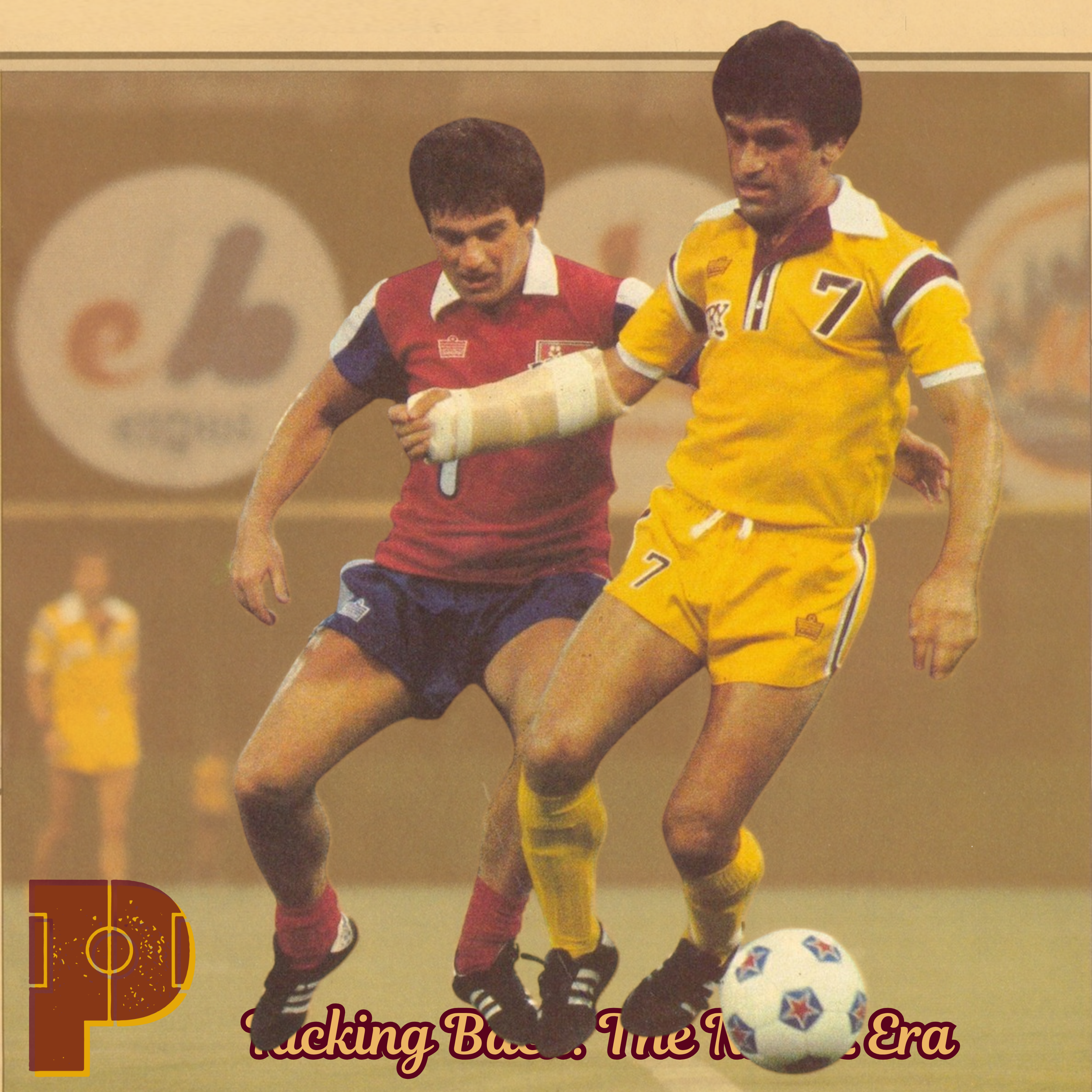
Another good player who came over from Europe was defender John Dempsey. He was a former Chelsea player, who won the FA Cup and the European Cup Winners Cup. The Irish international also played at Fulham in his time. John did make his mark on American soccer, playing on the old astroturf at Veterans Stadium from 1978-1980. His second year with the club 1979, was his best, where he earned NASL Co-Defender of the Year. Dempsey made 81 appearances for the Fury over the three seasons he was there. He ended his career back in Ireland with Dundalk.
Another very well known person to come through the Fury’s doors was Tony Glavin, who was born in Glasgow, Scotland. He played with Queen’s Park, and Hamilton Academical before coming over to the states. Tony came over to play with the Fury, before moving onto spending the rest of his playing career in Missouri. He first played for the St. Louis Steamers, and the Kansas City Comets. In 1987, the Steamers fired manager Pat McBride, and replaced him with Tony Glavin.
After his playing career was up in St. Louis as a player/manager, he moved on to be an assistant manager/player for the Kansas City Comets. Once his career was done, he became a bigger star in the game. In 1994, he founded “Tony Glavin Soccer Club” in Cottleville Missouri, and helped nurture the youth of St. Louis. To add more to this growing resume, he helped launch the St. Louis Lions in December 2005. He was also named head coach, and named to the St. Louis Hall of Fame.

Pat Fidelia was the most prolific substitute in American soccer history at the end of the 70s. He was born in Port au-Prince Haiti at the end of the fifties. Pat’s family moved to Mt. Holly New Jersey when he was at a young age. This is where he came under the tutelage of Roy Frazier, a South New Jersey coaching legend. Pat was the leading scorer at Rancocas Valley Regional High School, and helped Shamrock Boys Club to the National Junior cup in 1976.
Pat went off to Mercer County College in Trenton. He played in the squad that lost the 1976 NJCAA final to St. Louis Community College. While there, he also was named an All-American in 1976, and 1977. He scored 43 goals in his two years at Mercer. Now that he was an American citizen, he would count for the two American rule on the pitch or the bench. In that sense the Houston Hurricane of the NASL drafted him on January 23, 1978, with its fourth round pick.
He didn’t sign with the Hurricane so he was able to be picked again in the supplemental draft, this time by the Fury, in the third round. As a late match substitute, he was able to take advantage of the dead legs of the defenders. Pat scored his first goal in the 4-2 loss against the Caribous of Colorado. Fidelia came off the bench, and led the team in scoring with 8 goals. Five of those came in the team’s last 10 matches as they pushed to the playoffs. The efficiency was more impressive, they came off 40 shots, and 909 minutes of play. That was a goal every 114 minutes. He was named Pro Rookie of the Year by New Jersey sports writers.
The following year 1979, Pat came off the bench, he got nine goals, in 33 shots, playing 888 minutes, with four against the Portland Timbers. He also added two goals, both match winners in the Fury’s playoff appearances that year. Fidelia accompanied the franchise to Montreal, but lost his magic in the capital of Quebec, and was released. That caused him to move indoors and play for the Fever in 1981-82, where he also scored no goals. Pat moved onto the ASL in 1982, playing for Rodney Marsh’s Carolina Lightnin’ where he scored eight goals.
Pat has continued to play in Sunday leagues over the years. Next time, we will talk about the coaches who came and went in the last major soccer club in Philadelphia until the Union in the 2010s.
- by Stephen Brandt