The Trials of Saint Peter
As I sat down to interview Peter for the last time before beginning the writing process, I looked over my list of questions. Mostly rehashes from previous interviews, hoping to tease something new, a morsel more, to fancy up things. I logged into Zoom and he was already on. As he greeted me, his voice cracked and he looked down. Earlier that day he had posted a picture of a young fan with a comment that implied she had died, so I asked, “Do you want to reschedule this?”
I’ve interviewed Peter Wilt three or four times, both on and off the record. He’s one of the most jovial and happy people I’ve ever spoken with, even when being pressed on an uncomfortable subject. Should the topic not fit his aesthetic, he’ll spin the conversation quickly and, before I know it, I’m back to laughing and joking about some long dead soccer team. Peter is a happy man and it comes through in everything he does. All the more reason that when he greeted me that night, I paused at his out-of-character mood.
“Yeah, that might be best.”
I thanked him for his time and reached to turn off the video, but, unexpectedly, he began talking about the person who had died. How much he had appreciated her fandom. How sad he was at her young age. How angry he was at how unfair it all was. He talked about that fan for 20 minutes that evening, as tears streamed down his face, sipping a beer, and then he excused himself.
That was where this article was completed originally, but now, a year after the article was done, Chicago House was taken down in the Girard implosion and the club has played a season in the regional amateur league, MWPL. I reached out to Wilt recently to discuss his next steps and the club he helps lead. That interview is included in this article .
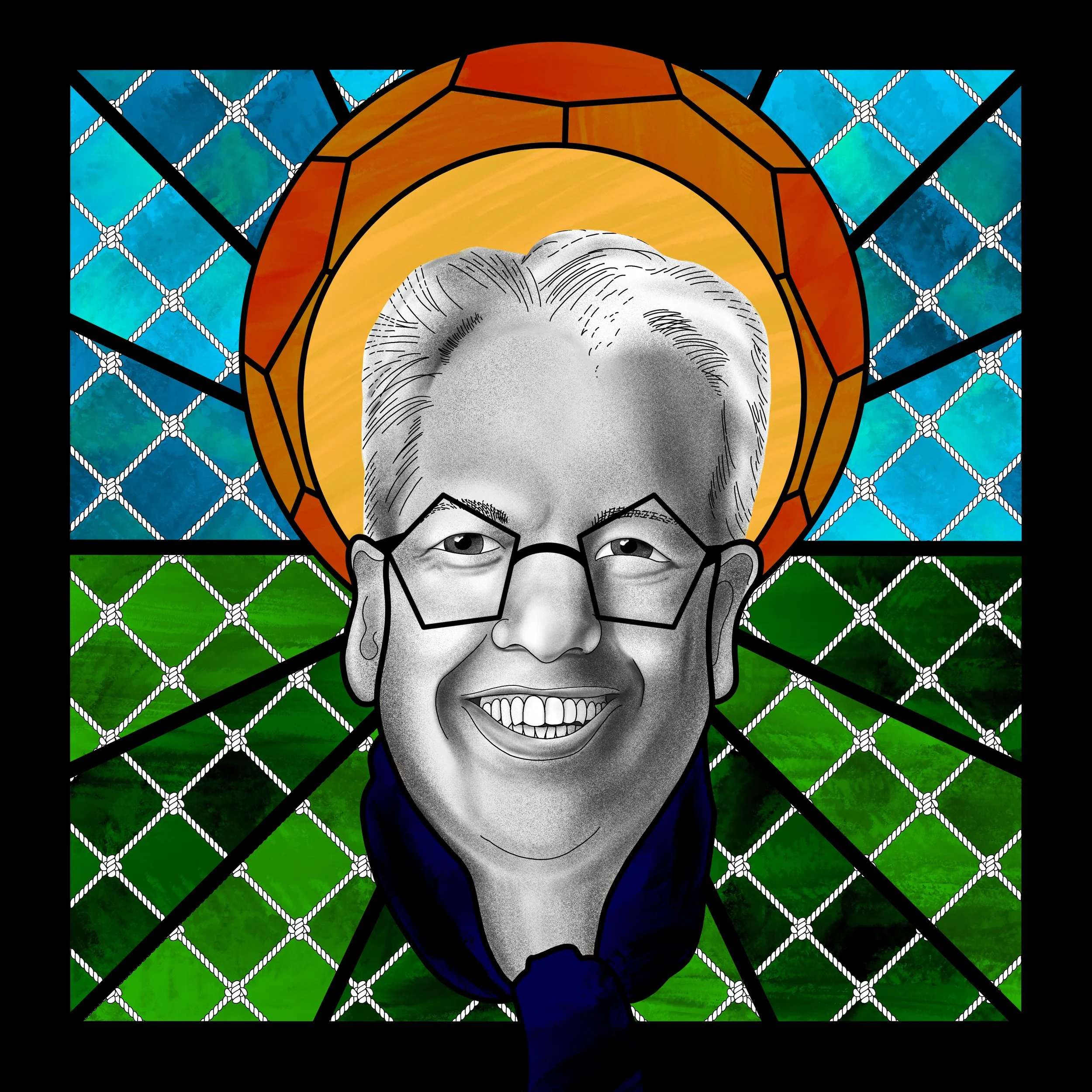
When a person is considered for canonization in the Catholic Church, there’s a series of steps. Each of those builds off the previous one and should a candidate fail at any point, the process ends. It is not enough to be a good person, instead one must stand up to the scrutiny of a tribunal, which digs for facts and details about the nominee. Once compiled, a report is given to the Pope and then the miracle step. A verified miracle has to be found and then, to raise the bar even higher, a second miracle must be found AFTER the first, to prove that the nominee is in heaven, interceding for those praying. Only then can the pope declare the nominee a saint.
If there should ever be a patron saint of American soccer, it would be Peter Wilt. The cheery midwesterner, born in 1960, has traveled the country, preaching the good word of soccer. He is a serial club starter, involved in so many, that when asked he typically puffs his cheeks, takes a long breath, and then just laughs about it. “A lot” is the usual answer. He’s an encyclopedia of soccer facts and dates, he knows everyone and everyone knows him, he’s the beer-drinking executive every fan wishes their club had. The soccer map is dotted with the clubs which he had a hand in creating, leading, or advising.
And if there was a canonization tribunal, set on scouring his history of deeds, searching for miracles and triumphs, many clubs he had crafted into being would be found. The Chicago Fire, which he piloted to the triple (MLS Cup, Supporter’s Shield, and US Open Cup) in the early days of that league. The Chicago Red Stars, which he helped establish in the WPS and which continues to flourish in the NWSL. Forward Madison, which has become the club every team emulates in USL1, unparalleled in fan engagement and branding. And, of course, his most recent foray into club building, Chicago House, which played a single season in NISA in the fall of 2021. NISA, by the way, would also be on his list of accomplishments as he was the original commissioner before stepping aside for current commissioner, John Prutch. Books will be written about the success of Peter Wilt, the importance of the clubs he led, and the impact his leadership had on the sport in this country.
But this is American soccer, afterall, we have no clean and spotless saints, nor should we. Our version of the beautiful game has grown only through the scrum of racism, xenophobia, and nativist challenges. Our history is chock full of leagues that have come and gone, so many that the number of surviving leagues are dwarfed by the 100s of leagues that have come and gone. The heroes of the past, instead of being lionized and celebrated, are paved over by newer leagues, set on establishing their own stranglehold on the sport. There are no perfect saints in American soccer, the most imperfect incarnation of the sport.
So let our saint be a flawed human as much as the rest of us, dipped in mud and covered in muck. Let’s celebrate the flaws and failures as much as the wins. Let’s hoist our failed savior to our shoulders and cheer his shortcomings, for he is an American soccer saint, as imperfect as the sport he thrived in.
Wilt didn’t grow up in a soccer household. In the 1960s, it was mostly baseball and definitely not soccer. “As a kid, I knew I wanted a career in sports. My dad was a sports fan and kind of turned me into a sports fan, but soccer wasn't one of the sports.” Armed with his hopes and dreams, Peter began sending application letters to 23 out of 24 baseball teams and, one by one, he got rejection letters back from each and every baseball team he contacted (the only club he didn’t mail was the now defunct Montreal Expos because “I didn’t speak French”). So his first job in sports wasn’t in his first choice, but instead minor league hockey.
It wasn’t until he had established himself in that position that he finally made the turn into soccer. But even that move was backed into. The local Milwaukee indoor soccer team was “looking for someone that knew sports business, but wasn't polluted with a soccer background.” And though Peter knew sports business, he was definitely not from a soccer background. His only experience with soccer up that point was in 1981, he had attended a Chicago Sting match in Wrigley Field, a match he describes as “the greatest game in Sting history.” His presence at that match was reluctant at best, due to an ongoing baseball player strike. Wilt was dragged to the sport that would define his career, kicking and screaming.
While Peter will most likely be remembered for his success with the Fire, it ended badly. So badly, in fact, that he’s not sure why he was fired. “I don't know. If you find out, let me know. I was told that the sales culture in our organization wasn't good, which wasn't true. I think what really happened is I reported over time to like five different people...We had a lot of properties that needed to be sold - sponsorships, naming rights, all that stuff, stadium inventory. And they didn't think that I could do it, even though we were doing better sales than New York, D.C., L.A., or any of the other AEG teams. So that was frustrating.” And even though there were fan protests, which “lionized [him] as martyr of the team, rightly or wrongly,” Wilt was shown the door, deposed from his throne of earlier successes.
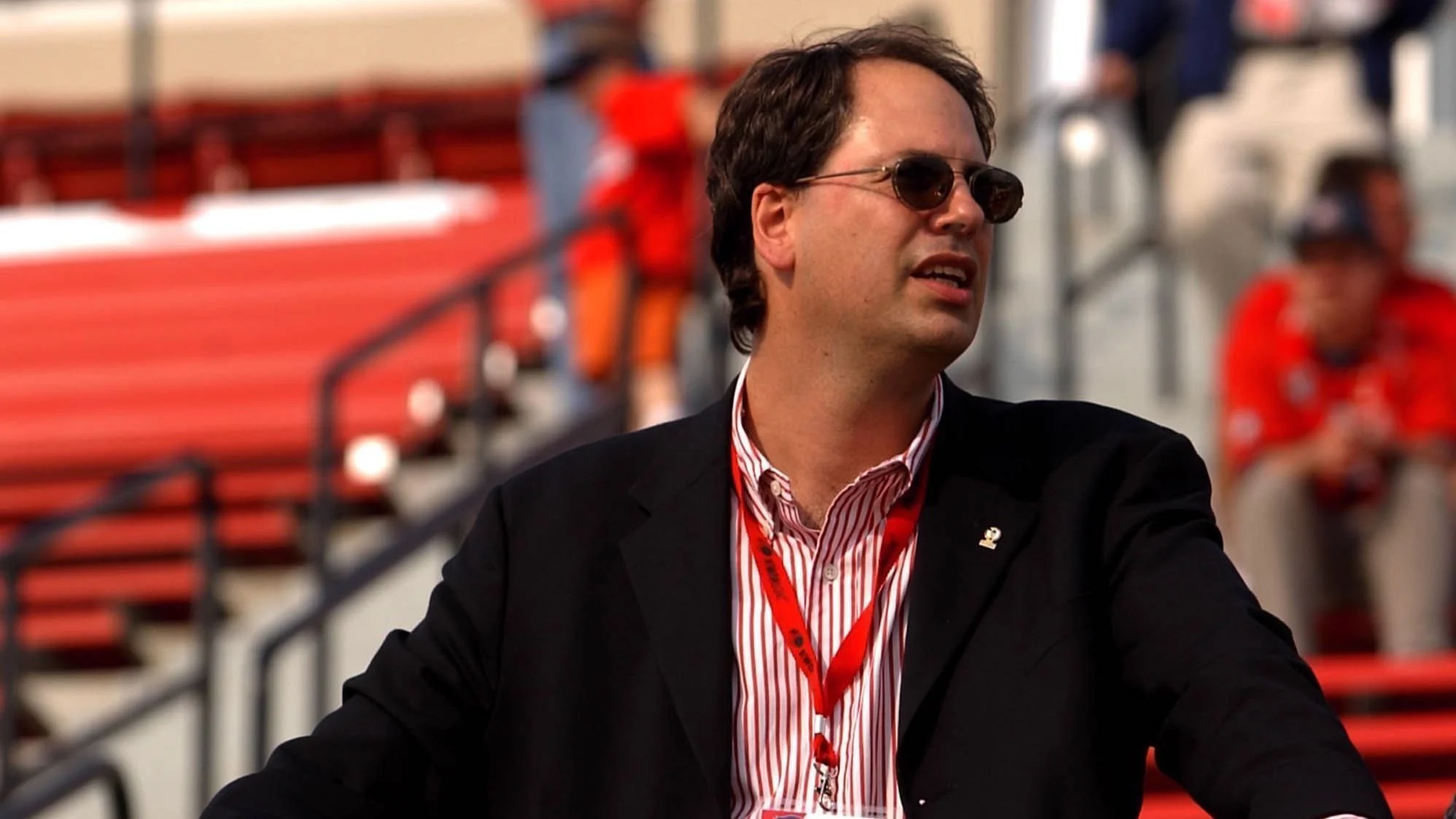
It isn’t like Peter to sit still for long, so he immediately began work with a new group, focused on building an MLS side in Milwaukee. When he speaks about this idea, now 15 years later, he still bubbles with excitement, describing land deals, funding, and long-dead agreements like they happened yesterday. In his mind, everything was set up for success, but it was “killed by the powers that be...because the power brokers in Milwaukee did not want professional soccer there.” And he names names as he rants about the injustice of it all - his fledgling club fighting for zoning permits that kept changing throughout their failed bid. And now, the land where a new MLS field should be is “Fiserv Forum where the Milwaukee Bucks play. Funny how that works.”
With multiple successful club launches in the USL system behind him, Wilt made the jump to NISA to launch the new professional league. And yet, with all the gravitas he brought to the table of the start-up, he failed to get the ball rolling effectively. In Wilt’s words, “we had these factions that all wanted the same thing, more or less. There were slight differences, I suppose, and what the visions were for each of them. But I think it was really just about selfish egos, power, and money. They all wanted to be at the center of it, and you couldn't have four different groups at the center of it.” He eventually gave up, stepped away, and allowed others to continue the work. There’s nothing more American than a scorned saint who can’t get any respect.
He would return to the league, this time running Chicago House AC with a Laurence Girard-led ownership group (who was also the primary owner of New Amsterdam FC). It was clear from the beginning that House was aiming to make a big splash in the Chicago market. Local legend CJ Brown was brought in to coach the club and Seat Geek Stadium was procured as a home field. It seemed like an overreach for the majority of NISA fans, but maybe Wilt knew better. The club struggled to find its footing in the league and with its potential fan base. Empty seats and an under-performing roster spelled disaster to onlookers early on. And though the team began to draw more as the season progressed, it was clear that they had bit off more than they could chew.
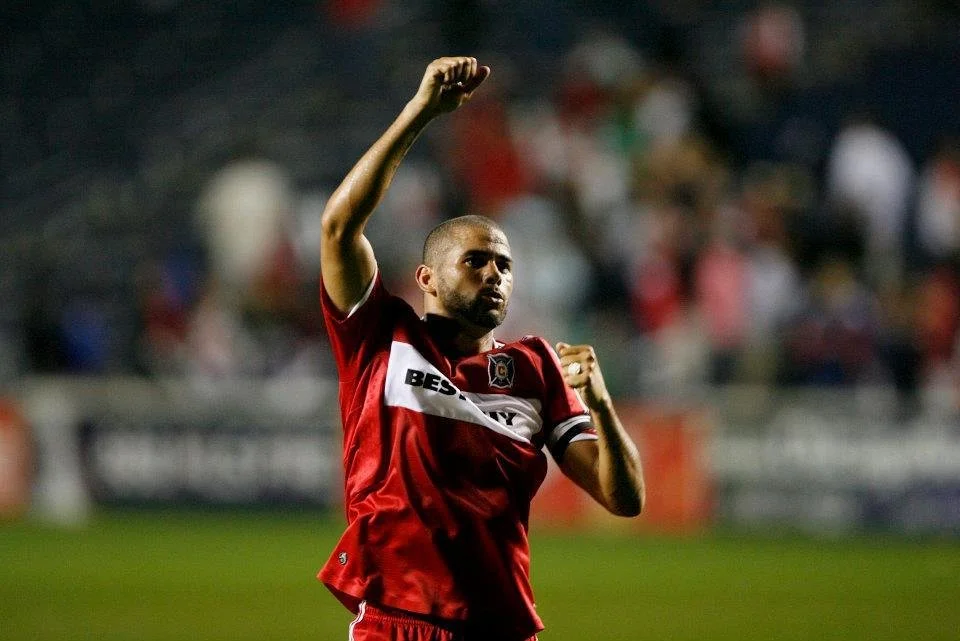
Former Chicago Fire legend, CJ Brown, brought credibility to the newly established House.
Girard’s implosion with NISA, the pizza giveaways, the apparent lack of funds, the social media tirades against the league and the commissioner, it was all too much for the league. Girard claimed loudly that the league had promised financial support upwards of a million dollars, but the league denied the claims. Of course, when you’re the league, you get to decide who is playing. NAFC and CHAC were removed from the league roster. So where did that leave Peter Wilt? He was the public face of House and many fans of the club and the man wondered how he would react.
Rather than give up, he cut back the employees of the club, went to volunteer staff, registered the team to play in the Midwest Premier League and continued forward. It fits into everything we know about Wilt - when life gives you lemons, you make lemonade. Peter is always open to making lemonade. Chicago House continues to play soccer, albeit on a smaller stage.
And, as you might expect, there is no bitterness from Wilt as he talks about his failures. Even in those moments when someone has personally prevented him from success, he is more disappointed than angered. “They have to live with themselves. I feel that they have more suffering than I do in the long term.” And here he pauses, his midwestern humility stopping himself from going too far. “I don’t want to do any holy-than-thou things, because I’m not perfect either. I just hope I’m not ever intentional in some of the mistakes I’ve made over my career. And I’ve made them! I’ve done wrong to people, I’m sure, but certainly not intentionally.” Again he pauses and thinks back over some of the incidents. “That’s a hard way to live. Or it should be. I’m comfortable in my skin and I don’t need all the bells and whistles to enjoy life.” Recently, when approached about the current state of Chicago House, he continued to be optimistic about the future, focusing on potential paths leading back to pro.
Maybe nothing is more American about Wilt than his irrepressible positivity. “I always like to have a good time and be happy. I equate that with being positive. I would like to think I see the good in things more so than I see the bad in things...some of the worst things that happen in your life become the best things that happen in your life.” Over and over again, when things went off the rails in his career, Wilt picked up, dusted off, and moved on to the next thing.
“In the big picture, a lot of stuff doesn’t matter. Life’s too short to be concerned or worried about ‘stuff.’ Relationships and attitude are what lasts. You have a choice with every challenge you face with how you react to it. You can get angry, upset, or frustrated. Or you can embrace it, learn from it and move on. And I think the latter is so much healthier.”
Two years ago, when Chicago House was announced, Peter was asked if he was worried about fans expecting success because of his involvement. His answer sums up an approach that has worked out more often than now. “Maybe I should, but I don't, because all I generally do is turn it over to them. That's all they want. I mean, they just want to take ownership in it and be involved in the decision-making in the direction of building the team. They know that what we build isn't going to be the best soccer in the world, but they also know it's going to be their soccer. It's going to be local.”
A product of the American system, brought through the early growth of MLS, carried through the end of the WPS, into the emerging USL, spat out of the chaos machine that is NISA, and now lingering in the MWPL. Peter Wilt is a modern prophet, traveling the dusty and unforgiving roads of the American soccer wasteland, declaring the promise of “the beautiful game.” His track record shows a brilliance unmatched by any single person in American soccer. And while some will only list his headlines, his failures are what make him an American soccer saint.
- Dan Vaughn