Kicking Back: Whips, Darts, & Dips - DC Soccer in the 60s & 70s
We are enough into this section on the non-massive teams of the NASL, we haven’t come through a city who has had as many failed teams, like Washington DC. They were up to four by the end of the eighties. Depending on how you define the predecessors to the Fort Lauderdale Strikers, Miami is up there as well. Today, we are starting the section on all the clubs in Washington DC before the great DC United team was founded in the nineties.
Whatever your opinion on Washington DC is, it has been important to many aspects of life since President Washington in 1790. Since the founding of nationalized sports, DC is one of those places who have had many franchises of different sports. Soccer is one such case. While we are only looking at the late 60s to the early 80s, like with any section of the country there have been many amateur and lower league sides in the capital.
The first franchise we need to talk about, wasn’t an autonomous club, just an American experiment with other clubs from other countries to participate in a summer tournament. The Washington Whips were part of the United States Soccer Association, with such teams as the Cleveland Stokers (Stoke City), the New York Skyliners (CA Cero in Uruguay), Boston Shamrock Rovers, Detroit Cougars (Glentoran FC of Ireland), Toronto City (Hibernian) were brought over as well to complete the Eastern Conference.
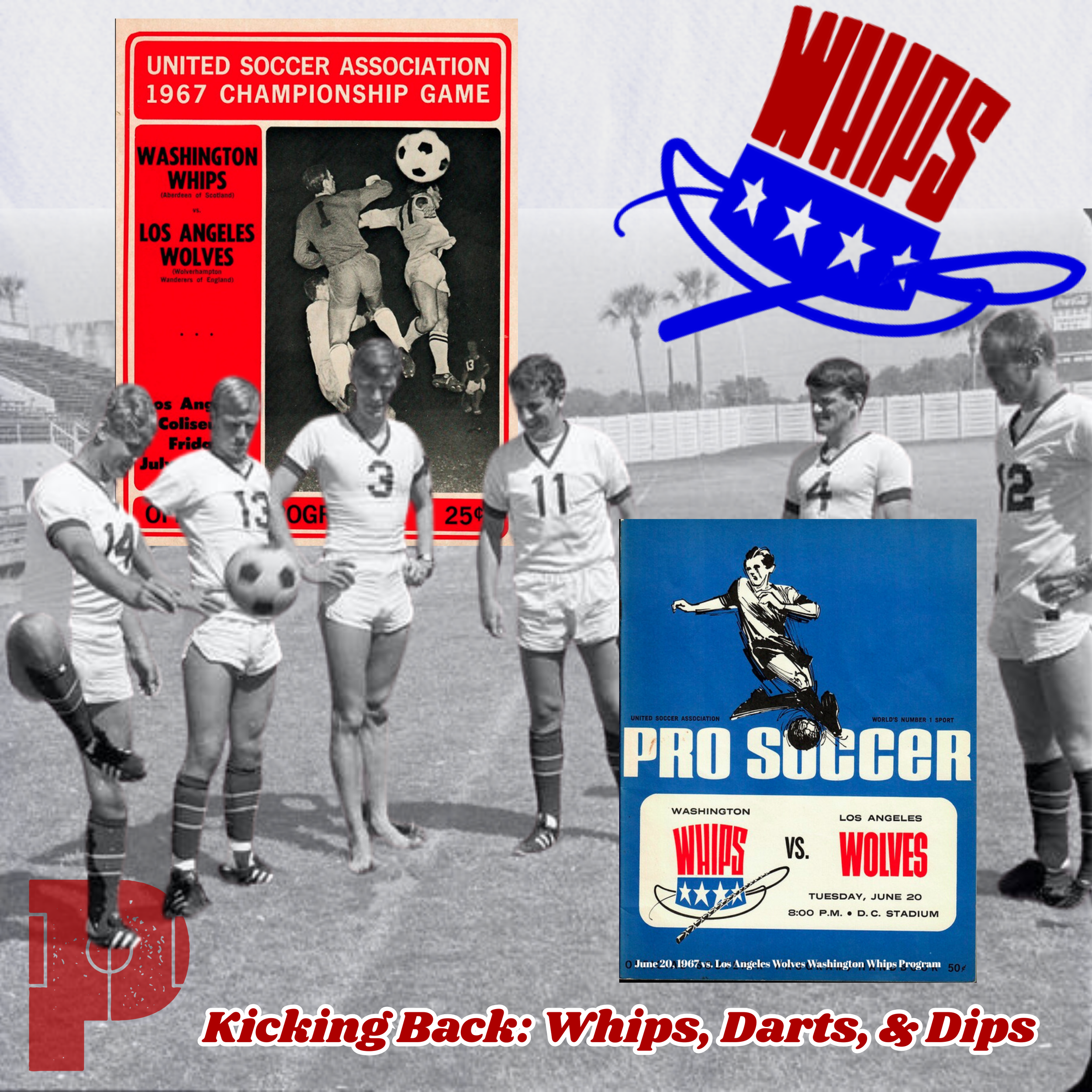
Ultimately, the Washington Whips lost to the LA Wolves in the 1967 United Soccer Association Championship Game.
There is an excellent book by Ian Thomson “Summer of 67”, and Abredeen does an amazing job of providing reading on this time for the Dons. This tour did well for Abredeen in the colonies. Though it started right after the Don’s defeat in the Scottish Cup Final against Celtic. Don’s manager Eddie Turnbull was ill during the Cup Final, but was able to join his club for the overseas tour. They got off to a terrible start losing 2-1 against the Cleveland Stokers, then they had their SPL brethren Toronto City who were actually Hibs. The Whips got goals from Jimmy Smith and Jim Storrie in the first half. The second half saw a goal from Eric Stevenson to win the match.
The Whips had a strange season as they were to grind out wins here and there. By the middle of the season, Washington and Cleveland were neck and neck with each other to get into the final game. But, Eddie Turnbull wanted to get his club through to the final match. First, they tied Wolves 1-1, next they were in Dallas to win over Dundee United 2-0. To get to the final they still had to get through Bangu, and they won on a Jimmy Smith goal.
This put them through to play the LA Wolves for a final place in the tournament. Ironically, they would be playing against each other in the finals, because USA Soccer leagues really never have made sense. The Whips ended up winning 3-0, so that would set up an easy win for the Whips right? Well, USA Soccer never makes sense. So the final was going to be in Los Angeles at the LA Memorial Stadium. But this wasn’t going to turn out well for the Whips, in overtime, the LA Wolves won 6-5. The following year, a different group of players showed up, and the fans stayed away. This caused the NASL of the time to fold in 1969. Some great players they had outside of the Aberdeen players; top scorer, midfielder Victorio Casa, an Argentine who lost an arm during military service, and forward Roberto Mauro.
The next attempt would be the Washington Darts, who would show up first in the American Soccer League from 1967 to 1969, and then the NASL from 1970-71. They were founded as the Britannica, but changed their names to the Darts in 1968. The Darts were very successful, winning two ASL championships 1968 and 1969, before making it to the 1970 NASL final. The Darts were known for their high-tempo, counter attacking style, with many Trinidadian players like Leroy De Leon, Warren Archibald, and Lincoln Phillips. Following the 1971 season they moved to Miami and eventually became the Fort Lauderdale Strikers.
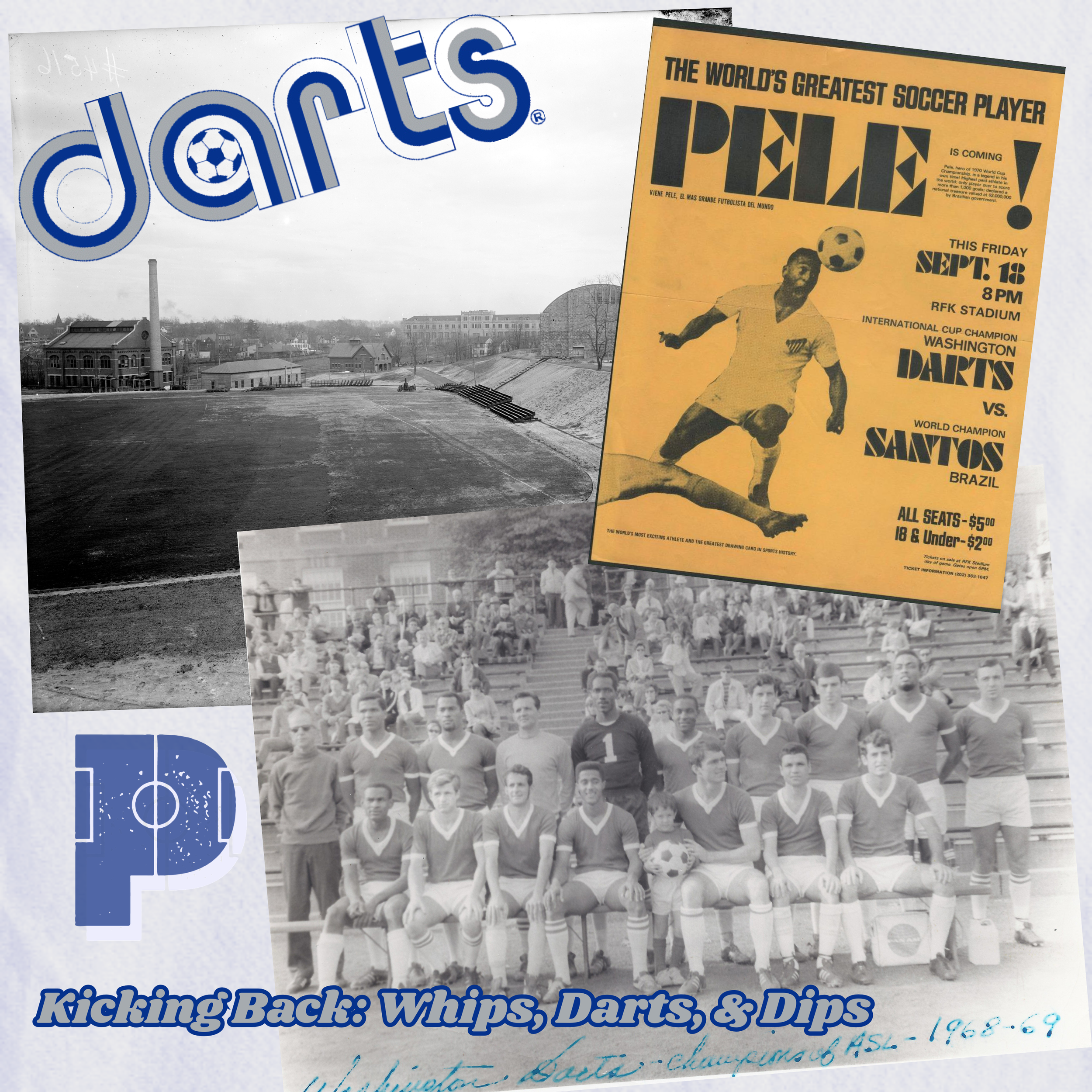
Brookland Stadium, home of Catholic University of America, hosted the second leg of the 1970 NASL Final. The Darts played a handful of interesting friendlies before moving to Ft Lauderdale, Florida.
In the 1971 season, there was an international match between the Darts, and Bangu of Brazil. The Brazilian side had been a staple of American soccer since the middle 60s. They even played as the Houston Stars of the United Soccer Association. This match was held at the 7,000 seat Catholic University Stadium on August 8, 1971. The match ended in a 2-2 draw, with goals on the Darts side from Tibor Szalay and Warren Archibald. Bangu 's goals came from Edson Bonfim and Amauri Da Silva. The Darts would play only two more home matches, and then they would be sold to the Robbie family, who moved the team to Miami.
By the middle of the 70s the NASL was looking to expand, and like any league, they wanted an in, with the nation's capital being empty of teams, the Washington Diplomats were formed. The owners Nick Mangione and Mike Finici put up the 75,000 to purchase the expansion rights to the Dips in January of 1974. Their first manager was Munich disaster survivor Dennis Viollet. During this time period, they only qualified for the playoffs once, and Violett was let go in 1977. Ownership changed hands in 1975 when the Danzansky family bought the team for 650 thousand dollars.
The Dips played at two different stadiums, one in DC, and a high school football stadium in Fairfax, Virginia for two two seasons. RFK was in the nation's capital and home of the NFL’s Washington Redskins (that was their name until the last ten years, and Commanders isn’t a bad name).
They did have a glory period at the end of the seventies, when they hired John Carbray as general manager in 1976. Two years later, former Cosmos manager Gordon Bradley was named as manager. Attendance rose after this in Fairfax to 5,963 in 1976, and 13,037 at RFK in 1977. Major success followed. But they needed money, which came in October 1978, by the name of Madison Square Garden Corporation, one of the many things under the conglomerate of Gulf & Western. They also owned an arena in the name, the NHL New York Rangers, and the NBA’s New York Knicks.
With this money behind them, and Sonny Weblin as the main negotiator, they went after Argentine World Cup captain Daniel Passarella, and 1978 European-Footballer-of-the-Year Kevin Keegan. Both failed. It wasn’t the last time Sonny Werblin would take a stab at European greats. In 1980, he laid down a 1 million dollar transfer fee to secure the rights to Los Angeles Aztecs player, Johan Cruyff. Werblin now signed Cruyff to a 3 year, 1.5 million dollar contract. This wasn’t the last Dutch player to sign for the Diplomats: Wim Jansen, and future MLS coach Thomas Rongen.
The Dips now had to go all in on the 1980 season. The first match was on 13 April 1980 in a 3-1 win over the Fury in the nation’s capital. They were able to bring in 24,203 on the opening day, but it showed they still weren’t going to hit the 51,225 that the Cosmos drew for their home opener. Over a month later, on the first of June the Cosmos came to RFK, and they saw a record attendance of 53,351. The match was nationally televised, and the Dips took a 1-0 lead into half on a Bob Iarusci penalty. In the second half Giorgio Chinagglia, and Vladislav Bogivevic sealed the win for the Cosmos. The team finished 17-14, down from a 19-11 record of the year before, and finished in 2nd place behind the Cosmos for the third straight year. Just like 1979, the team was dumped out in the first round playoffs by the Los Angeles Aztecs.
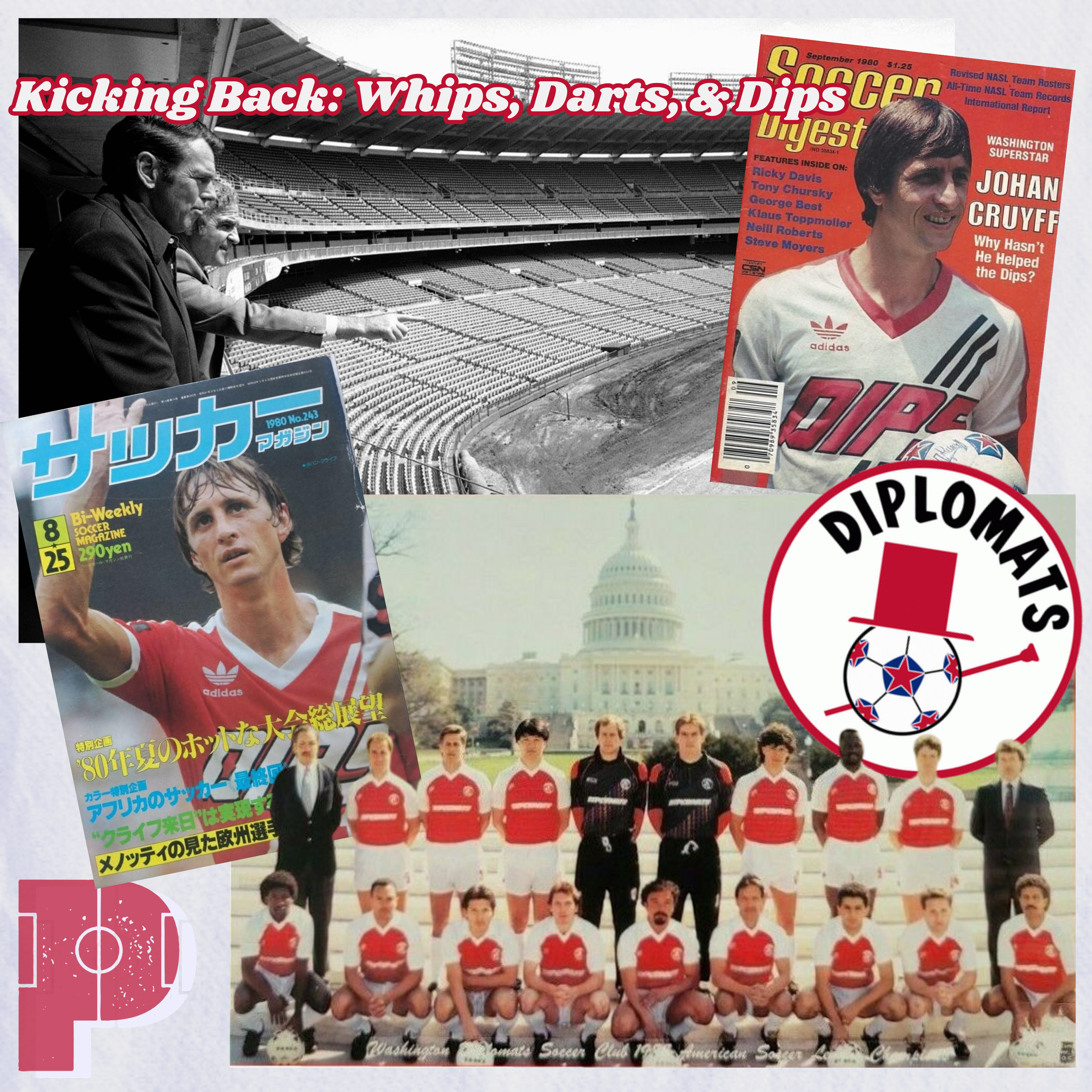
By October 1980, MSG was grumbling about how the league made money, and sent the team on a 10 game tour of Asia. Right before Thanksgiving 1980, the NASL announced that the Dips had voluntarily terminated their membership to the league. All was not lost, just three months after the original Dips died, another team acquired the naming rights and franchise. This time it was a three year old club that was formerly known as the Detroit Express. They were owned by Jimmy Hill.
Just 29 days before the start of the 1981 NASL season, the NASL approved the relocation of the Express to Washington. This version of the Dips was not good at all even with Cruyff still around, they finished 15-17 and missed the playoffs. And then, this version of the Dips failed too. This isn’t even the last version of the Dips, because in 1987 the third and final to this point of the Dips took up residence in RFK. They played in the American Soccer League. This was yet another team that changed their name to the Dips. They were originally called Club Espana, and won the 1987 U.S. Open Cup. In June 1987 Club Espana owner Julio Pinon changed the name to the Dips.
This version of the Dips was much better. They won the first championship of the ASL in summer of 1988 by beating the Fort Lauderdale Strikers over two legs. They finished the regular season 10-10, with only forward Joaquin Canales on the league’s postseason All-Star team. The following year, they tried to defend their title, but on June 17, 1989 forward Jean Harbor got into a fight with Strikers defender Pedro Magallanes, where Harbor punched the defender in the face breaking his jaw. Commissioner David Prouty suspended Harbor for the rest of the season.
Prouty later reinstated Harbor after only five games, but the Dips went into a slide, and missed the playoffs. They did have three of the ASL’s top six scorers; Leonel Suazo, Marcela Bauza and Harbor. In 1990, the ASL merged with the Western Soccer League, to become the American Professional Soccer League. The operating costs finally caught up with Dips owner Julio Pinon. They weren’t getting a good return on ticket sales, with fewer than 1,000 fans at a 55,000 seat RFK. By the end of the 1990 season, the team folded up.
In between the two versions of the Dips in the eighties was a very strange thing. That’s even saying a lot for the NASL. Team America, while a good idea, was doomed to fail in 1983. This was the US Men’s National team in league play, but they entered the league at a bad time. Just three years before the league had 24 clubs, now they have just 12. The new league CEO, yes, not the commissioner, Howard Samuels, wanted the league to stop bringing in aging, expensive foreigners, and develop American players.
USSF wanted to develop a strong team to qualify for the 1984 Olympics in Los Angeles, and for the World Cup in 1986. The latter the US hadn’t accomplished in 36 years, so USSF decided to form Team America, made up of 20 of the best American players in pro soccer. This would also make the team train together during the season. Though, they needed a private investor to back the team, and in came Robert K Lifton, Howard Weingrow, NASCAR, Mike Curb, and Warner Hodgdon. They got sponsorship from R.J Reynolds Tobacco, which was run promoting Winston Cigarettes. Once again, this is the eighties, we were weirder. Also, the NASL had to get the American team players to this new team.
However, some players did not want to leave their teams, Rick Davis, Angelo DiBernardo, and Steve Moyers of the Cosmos, and Mark Peterson. Peterson was the NASL reigning North American Player of the Year. Though Team America was able to get; Jeff Durgan, Dan Canter in defense, goalkeeper Arnie Mausser, and Andrew Parkinson. The team did start out well going 8-5, but fell apart going 2-15 the rest of the way. Owner Robert Lifton folded the club when the NASL season ended in September 1983. You may ask what happened to the American team? The team did make the 1984 Olympic Games, but the U.S failed to qualify for the 1986 World Cup. They did however, qualify for the 1990 world cup, ended the forty year exile from the cup.
- by Stephen Brandt